Contact
- 0118 981 5343
 07931 873 706
- sales@ashbytrade.co.uk
- Ashby Trade Sign Supplies Ltd
- Basingstoke
- Hampshire
- RG24 7NG




© 2026 Ashby Trade Sign Supplies Ltd
Bespoke Manufacture
Trade Supplier
Same-Day Dispatch
07931 873 706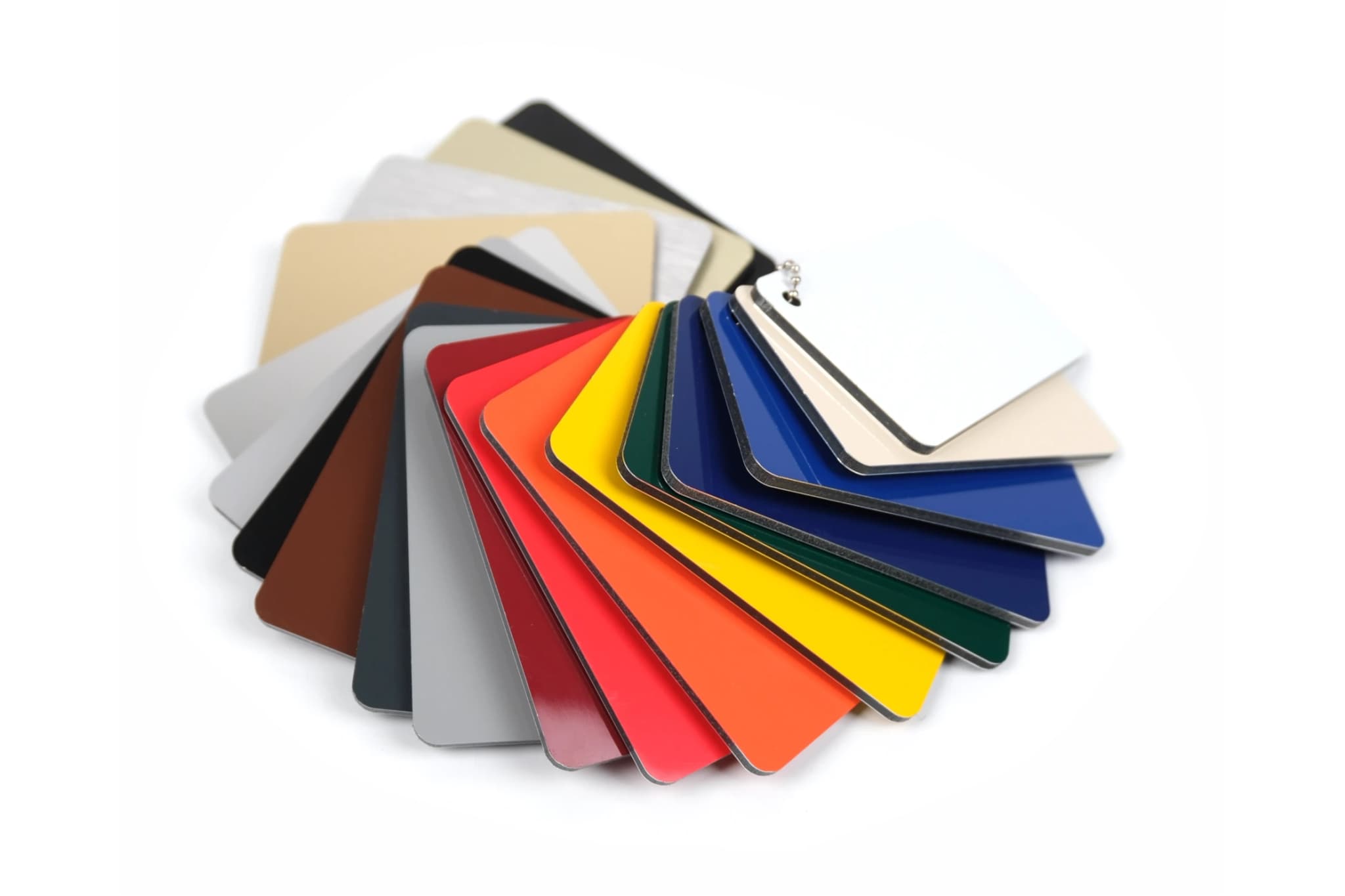
Aluminium composite material – usually shortened to ACM – is now one of the standard substrates in sign making. It’s light, takes print and vinyl well, and comes in a wide range of finishes, so it’s very tempting to reach for it by default.
This guide looks specifically at standard ACM, not traffic-grade products. This material is designed to act as a facing material, not as a structural sign or a road sign. It is not suitable for traffic signage; due to a lack of strength it will not be regulation compliant for use with mechanically attached clip channels. Instead, use a traffic grade ACM or solid aluminium. Where a rear support is needed, ACM is normally bonded using VHB tape and/or structural adhesive.
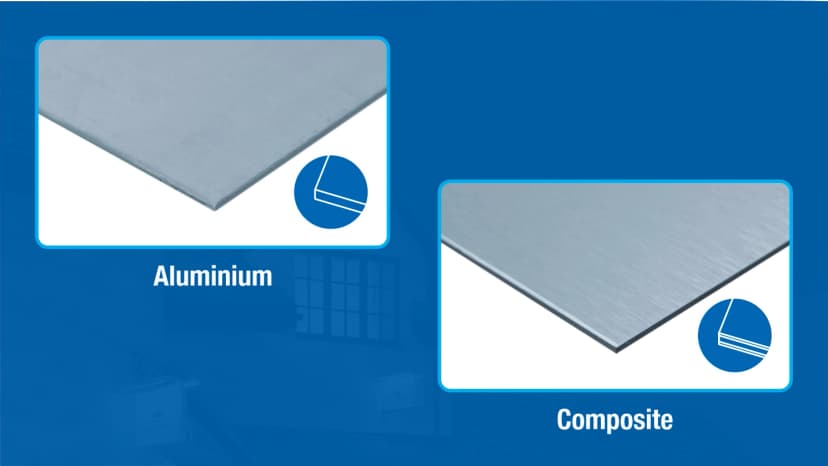
ACM is a sandwich panel. Thin aluminium skins are bonded to a central core, usually polyethylene, to create a relatively stiff but very lightweight sheet. In sign work you’ll typically see composite in thicknesses around 2–4 mm, with 3 mm being a common “go-to”, and what we hold in stock.
It’s worth being clear that this material is not the same as traffic-grade ACM or solid aluminium. If you’re working on anything that has to meet highway standards, you should be looking at aluminium sign blanks and other certified materials.
When you keep it in its lane, composite does a lot of things well.
Most sign makers notice the weight. A large ACM fascia or cladding panel is significantly lighter than an equivalent solid aluminium panel, making it easier to move around the workshop, lift into position and fix without over-engineering the support structure. That reduced weight can translate into simpler fixings and quicker installs.
Finish choice is another attraction. Composite is available in a broad palette of pre-finished colours and effects, including metallics. In many cases you can use the face as it comes off the rack.
While not as flexible as aluminium it still has a good level of workability, allowing common CNC routers to cut complex shapes, or folding grooves to make sign trays.
Finally, cost is often favourable. The material itself is cheaper than aluminium, especially if you can use an "off the rack" finish, with the light weight reducing weight-based transportation costs.
The flip side is that composite is not 'simply the best', and it behaves quite differently to solid aluminium.
The most important point is that standard sign-making ACM is not a structural material. The core and skins combine to give stiffness, but they don’t offer the same strength or predictability you get from a solid metal panel. If you span too far with too little support, the panel can flex or flutter under wind load, which isn’t good for longevity or appearance. Mounting built-up lettering or additional signage, such as a projecting panel, would be inappropriate for composite signs/trays, as this would likely exceed it's strength.
A practical limitation is fixing. Standard ACM is often not strong enough to accept mechanically fixed clip extrusions in the long term. If you are using composite and want fixing rails, the channels need to be bonded using VHB and/or structural adhesive. But please note: this does not comply with standard UK regulations for traffic signage and cannot be used for this type of signage.
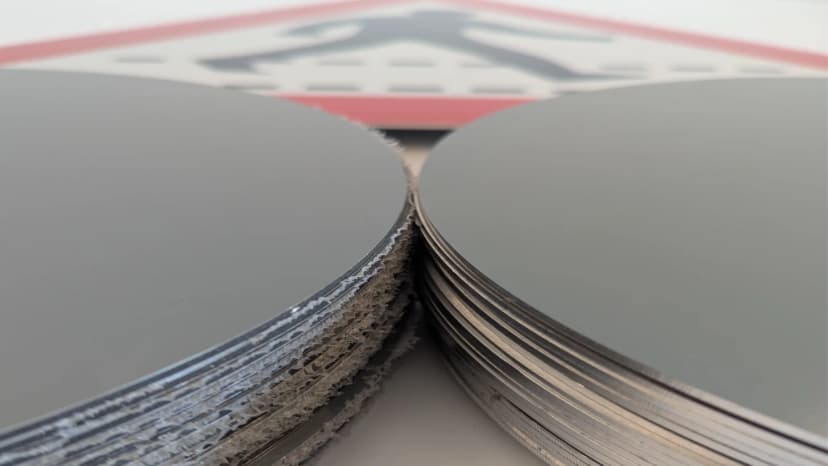
Composite is also less tolerant of heavy abuse. It performs perfectly well in normal commercial environments, but hard impacts can dent the skins, bend the sign itself, or even expose the core. In locations where knocks, trolleys, vehicles or deliberate vandalism are likely, solid aluminium is normally the safer long-term option.
Colours and finishes can also be a limitation. Branding guidelines often require specific colours and finishes for signage. As composite cannot be powder coated this forces colour solutions be fulfilled by vinyl or printing services. This needn't be a deal-breaker but must be considered.
Lastly, edge degradation. The exposed core at the edges can be vulnerable to moisture ingress over time, particularly in exposed settings. The edges of composite can also be unsightly for those with an eye for detail. Both can be dealt with by wrapping the edges with vinyl or print (assuming those are being used).
With those limitations in mind, there are plenty of situations where composite really shines.
One of the classic uses is the shopfront fascia. Here you already have a structure – timber grounds, steelwork or an existing sign band – and what you need is a flat face to take vinyl, prints or flat-cut letters. ACM works very well for this, allowing you to clad out uneven backgrounds and create continuous runs along a parade. ACM can also be formed into sign trays, allowing greater flexibility in this space.
Indoors, composite makes a very capable substrate for directory boards, wayfinding panels and branded feature panels. Loads are modest and the environment is kinder, so the focus can be on finish and install speed. An ACM panel printed or faced with vinyl can produce a perfectly professional result without the additional cost and weight of solid aluminium.
It also comes into its own for hoardings and other short- to medium-term external schemes. On construction sites and refurb projects you often need to create long, graphic-ready runs over timber or steel hoarding frames. Composite panels are light enough to install quickly, flat enough for print and generally robust enough for the life of the project, provided the frame and fixings are sensibly detailed.
For non-traffic wayfinding and building ID, composite is usually a perfectly acceptable choice as long as the panel is supported properly. Wall-mounted building name panels, entrance directories fixed back to cladding, campus maps mounted to a tray or frame – in all of these, the panel is providing a graphic face rather than carrying wind load on a post.
Do treat ACM as a facing material and give it a suitable frame or substrate.
Do use VHB and compatible adhesives where you need to bond panels to fixing channel.
Don’t specify standard composite for traffic-grade or safety-critical signs that need specific materials and testing.
Signs made from composite materials are available in our Component Shop and through our 3D Sign Builder.
If you're still unsure which material may be right for you, read our aluminium vs composite piece.
Need Help?
Contact our team weekdays 8am–6pm on 0118 981 5343, or email sales@ashbytrade.co.uk.